How to repaint hallways, stairways and living areas
Learn how to prepare and repaint hallways, stairways and living areas with this step-by-step guide brought to you by Resene.

Instructions:
Refer to the PDF flowchart for a visual of the steps below:
-
Using a soft cloth, wipe the walls down using Resene Interior Paintwork Cleaner.
-
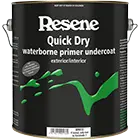
Fill all dents, defects and holes with PAL Contract Filler or Resene Ezyfill Quick, which is ideal for smaller dents and holes, and lightly sand. Large repairs may need sealing with Resene Quick Dry (D45) primer.
-
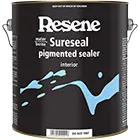
Apply Resene Waterborne Sureseal (D42a) or Resene StainLock (D408) to any water stains or ink marks.
-
Fill any cracks between the walls and skirtings and/or scotias with Sika Fill That Gap
-
Mask edges of door and window frames, skirting boards and light switches with yellow washi (multipurpose) masking tape.
-
Apply topcoats:
An average room will use about 4 litres of paint on the walls

Photo by Wendy Fenwick

Photo by Helen Bankers

Photo by Helen Bankers

Photos by Brett Boardman, Anson Smart
Things to consider:
- What is on the walls? E.g. are they painted and do you know what with?
- What condition are they in?
- Are there any critical lighting issues?
- Have you decided on a colour scheme?
- What is the size of the room(s)?
Notes:
-
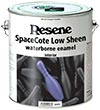
Resene SpaceCote Low Sheen is our best system as it is more hardwearing than Resene Zylone Sheen or Resene SpaceCote Flat
-
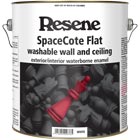
Hallways and stairwells are most prone to critical light issues, especially stairwells as they often have high windows and horizontal joins in the wall linings. Use Resene SpaceCote Flat where critical light is an issue. This is not as durable nor hardwearing as Resene SpaceCote Low Sheen but will help to minimise the critical light issue.
-
The actual surface area to be painted is often smaller than expected as there are usually plenty of doors and in older houses, high skirting boards.
-
A third coat may be required for some colours, bright yellows for example and also some very pale shades. The colour being overcoated is also a factor – if you are going from very dark to light or vice versa.
Key accessories essential to complete the job
- 220 grit sandpaper for preparing filled areas and any surface imperfections.
- 38-50mm PAL Legend, Basil Hybrid or MacGyver brush and/or a cutting in brush
- PAL No.1 or for a smoother finish the PAL No.7 roller sleeve.
- Resene Interior Paintwork Cleaner (concentrate)
- Roller handle and roller tray
- Good quality extension pole, recommend the MacGyver Boss extension pole.
- PAL Contract Filler or Resene Ezyfill Quick
- Sika Fill That Gap
Add-ons – to make the job easier or quicker
- Paint pot to decant into
- Drop cloth
- Yellow washi (multipurpose) masking tape (for light switches and painted skirting boards)
- Meths for clean up around light switches, enamel skirtings etc
Products to use



It is impossible to cover all decorating scenarios in a single document, so if you are in doubt about any aspect of your project please contact Resene for assistance.
Ask a Paint Expert | Ask a Colour Expert | Visit your local Resene ColorShop
View product range | Choose colours: Colour charts | Colour library | Book a colour consultation