Health and safety
How to be sun smart when working outdoors
Painters and tradies receive up to 10 times more UV exposure than indoor workers, so it's crucial to be sun smart.
Thanks to our harsh sun and outdoor lifestyles, New Zealand and Australia have the highest rates of skin cancer in the world. Over 90% of skin cancer is caused by too much exposure to UV rays from the sun – and it’s not just during summer, as UV rays are present every day of the year.
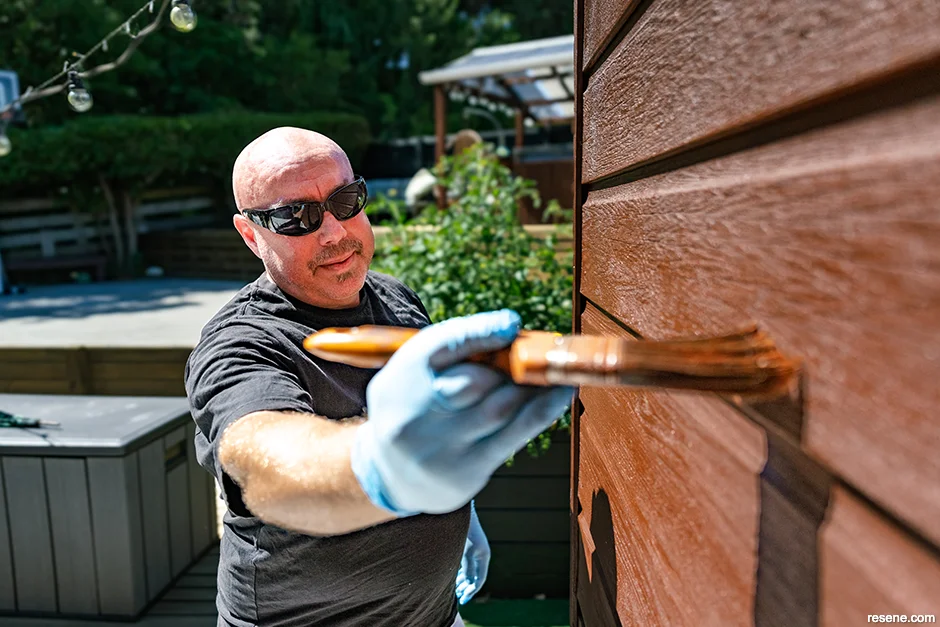
Thanks to our harsh sun and outdoor lifestyles, New Zealand and Australia have the highest rates of skin cancer in the world. Over 90% of skin cancer is caused by too much exposure to UV rays from the sun – and it's not just during summer, as UV rays are present every day of the year.
Since painters and tradies spend many hours per day working outside, they have a higher risk of developing skin cancer because they can receive up to 10 times more UV radiation exposure than indoor workers.
With this in mind, it’s essential to be sun smart on the job. No one is immune – people of all ages and skin colours can be diagnosed with skin cancer. Luckily there are plenty of ways to protect yourself and minimise the risk.
Protect yourself on site
Apply broad spectrum sunscreen, ideally SPF50, at least 20 minutes before going outside. Apply plenty of it, too – about two teaspoons for each leg, and one teaspoonful for each arm, your back, your front and your face (which includes your neck and ears).
Ignore “once-a-day” claims. Sunscreen should be reapplied often – every two hours you’re outside – and remember that mopping sweat reduces protection. Make sure to apply another coat of sunscreen immediately.
As well as your PPE, wear sunglasses, cover up with long sleeves if you can and wear a wide-brimmed hat with a neck guard.
Remember to pace yourself when you’re tackling a large project outside. Break large projects into smaller manageable chunks, stay hydrated and take regular breaks.
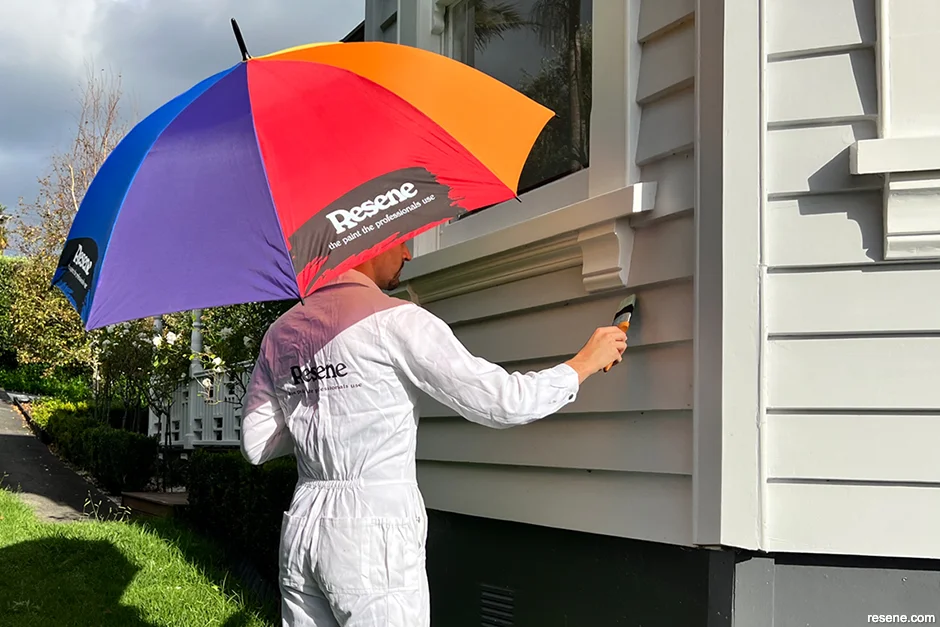
Protecting your employees
When running a business, it’s not just yourself you need to worry about, it’s your team.
Under the Health and Safety Work Act (HSWA) 2015, employers are responsible for not putting workers at risk from UV radiation. If it is identified that UV could be a hazard, employers must take steps to deal with this risk.
The best way to ensure you are protecting your employees from harmful UV radiation is to adopt a SunSmart workplace policy. A sample policy is available here that you can adapt to suit your particular workplace.
On their website, SunSmart has provided the following handy tips for employers to provide a SunSmart workplace:
Remember that employees who work outside all day are advised to use sun protection measures year-round because UV radiation damage accumulates over time. Even low UV radiation levels can be harmful if workers are exposed for long periods.
Reduce the amount of time workers spend outside in the sun if possible through providing shade or rescheduling work tasks.
An employee sitting in a vehicle or close to windows with direct sun can still receive significant exposure to UV radiation. Make sure to use film or tint windows to provide protection.
Provide items that can protect employees from the sun like water-resistant, broad-spectrum sunscreen of at least SPF30; sun protective clothing; a wide-brimmed hat or helmet with a peak; neck guard and close-fitting sunglasses that meet safety and sun protection standards.
Remember sunscreen should be liberally applied every two hours (or more often if sweating) and not stored anywhere too hot, like a car glovebox.
Give employees training and information – including how to check your skin. The Cancer Society and Melanoma New Zealand have information about skin checks.
Record and monitor UV radiation-related injuries.
It’s also good to encourage workers to be SunSmart when they head outside to take a break, walk to a meeting or get exercise.
› Read more about Worksafe and your primary duty of care.
Skin cancer: What to look for
Prevention and early detection is key. The sooner a skin cancer is identified and treated, the better your chance of avoiding surgery or, in the case of a serious melanoma or other skin cancer, potential disfigurement or even death.
Checking your skin regularly is crucial and if you work outside. It is highly recommended to have an annual or six-monthly skin check and to consult with your doctor immediately if you notice any changes whatsoever to moles or freckles on your body. Look out for changes in size, shape, colour and thickness.
Asymmetry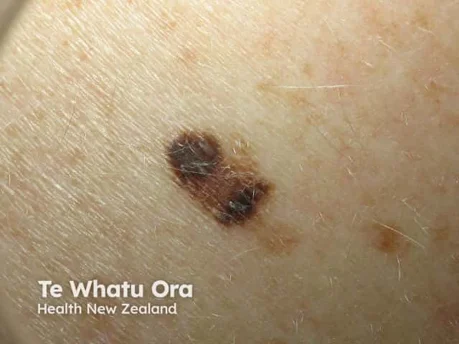
Sourced from DermNet
Border irregularity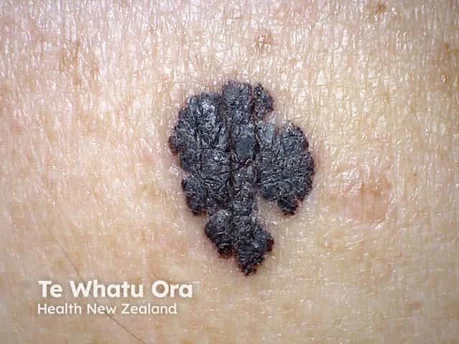
Sourced from DermNet
Uneven colour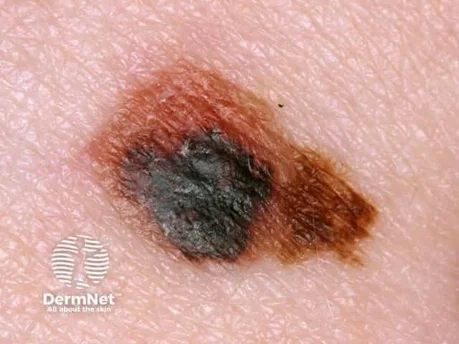
Sourced from DermNet
Difference
Sourced from DermNet
Is it evolving?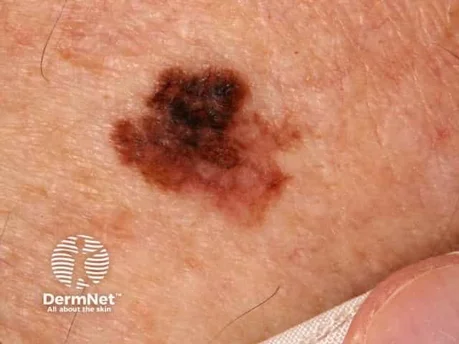
Sourced from DermNet
Firmness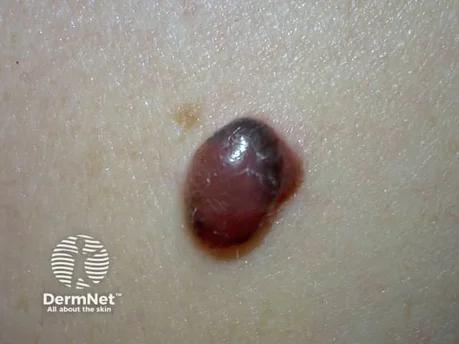
Sourced from DermNet
Is it growing?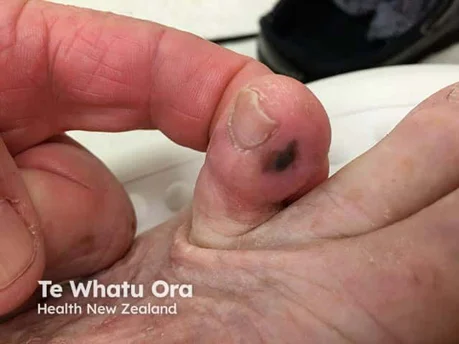
Sourced from DermNet
The Cancer Society website states that the three most common types of skin cancer are:
BCC (basal cell cancer): The most common, usually pink and may bleed or itch. The growth is confined locally, potentially more dangerous on the face.
SCC (squamous cell cancer): More serious as they can spread to the lymph glands, often arise from sunspots, are usually scaly and may be tender.
Melanoma: The most serious as they can spread via the blood stream throughout the body, can arise anywhere on the body, including areas that have never seen the sun, can be raised or flat, fast or slow-growing and rarely can be pink in colour.